
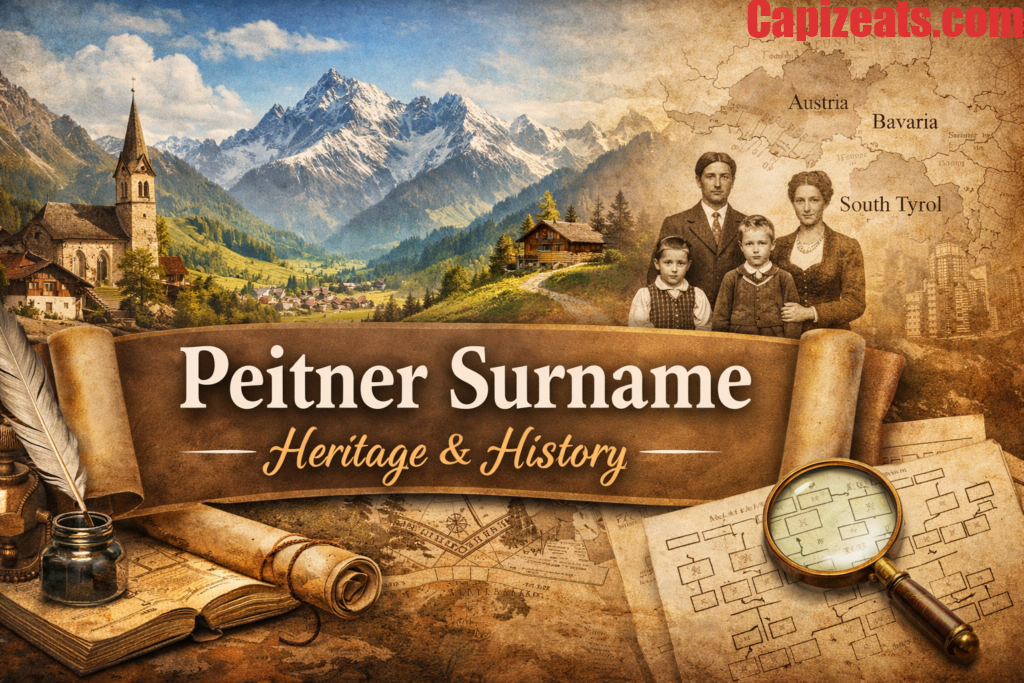

Peitner carries a rich history that is deeply intertwined with the cultural and geographic fabric of Central Europe. Though not as widely known as some European surnames, it embodies centuries of heritage, family traditions, and social identity. Names like Peitner are more than mere identifiers—they are markers of lineage, geography, and occupation that reveal the stories of the people and communities from which they arose.
Exploring the surname offers insight into linguistic history, regional influences, and the evolution of European surnames over time. Meaning and etymology of it, its historical origins, regional presence, variations, and related surnames, providing a comprehensive understanding for anyone interested in genealogy, history, or cultural studies.
The Meaning of Peitner
The meaning of the surname is multifaceted, reflecting linguistic, geographic, and occupational influences.
Linguistic and Etymological Roots
Peitner has Germanic and Austrian origins, with possible influences from Yiddish among Ashkenazic Jewish communities. Linguistic studies indicate that the surname may have arisen from Middle High German, a language spoken in Central Europe during the medieval period.
Topographic Origin
The most widely recognized interpretation of it is topographic. Derived from the Middle High German word līte, meaning “slope” or “mountain spur,” the name likely referred to families who lived near elevated terrain or hillsides. Such geographic naming was common in Alpine regions, where the rugged landscape shaped daily life and community identity. A person living near a mountain slope would naturally be identified with that feature, giving rise to surnames like it.
Ashkenazic Occupational Origin of Peitner
In some contexts, it may have developed as an occupational surname within Jewish Ashkenazic communities. During medieval times, it was common for surnames to reflect a family’s trade or profession. Families involved in crafts, metalworking, or specialized trades may have adopted it to signify their social and professional roles within their communities. This dual origin—topographic and occupational—illustrates the layered history behind the surname.
Cultural and Familial Significance
Surnames in Europe served not only as identifiers but also as symbols of heritage and community connection. Peitner represents the link between family, place, and profession, preserving a sense of identity across generations. For modern descendants, the name carries emotional weight and a sense of belonging to a lineage with deep roots.
Variants of the Surname
Like many European family names, it has evolved into several variants, including:
- Peintner – a common alternative, particularly in historical records.
- Leitner, Leidner, Lightner – other related forms influenced by dialect, pronunciation, or regional transliteration.
Understanding these variants is crucial for genealogy research, as they often indicate the same family lineage documented differently across regions and periods.
Historical Origins of the Peitner Surname
The historical origins of it are closely linked to Central Europe, especially the Alpine regions of Austria, Bavaria, and South Tyrol.
Emergence in Central Europe
It appears in historical records during the Middle Ages, a time when surnames became hereditary across Europe. Families were often named according to occupation, geographic location, or social roles, which helped distinguish individuals within communities.
Development During the Middle Ages
During this era, surnames like Peitner reflected everyday life:
- Geography: Families living near hills, slopes, or ridges were identified by these features.
- Occupation: Craftsmen, metalworkers, and other skilled trades used surnames to indicate their profession.
- Social Role: Names sometimes signified social standing or community involvement, giving families a recognized identity within their regions.
The combination of these factors shaped the enduring legacy of the name.
Documentation and Regional Presence of Peitner
Historical documents, including parish records, land registries, and civic lists, reveal the presence of its families in Alpine regions. These records demonstrate that the surname was associated with both urban and rural communities, highlighting the family’s versatility and integration within society.
Impact of Migration and Local Dialects
Migration played a significant role in its evolution. Families moving across Austria, Bavaria, and South Tyrol adapted their names to local dialects and writing conventions, giving rise to variations like Peintner, Leitner, or Lightner. Regional pronunciation and transcription practices in official records influenced how the name was documented, creating a rich tapestry of surname evolution over centuries.
Regional Presence of Peitner
It has historically been concentrated in German-speaking Alpine regions, with a notable presence in Austria, Bavaria, and South Tyrol.
Austria and Tyrol
Tyrol, a mountainous region in western Austria, is historically central to the surname. German-speaking communities here often adopted surnames linked to geography and local occupation, reflecting the terrain and lifestyle. The Peitner families were likely engaged in farming, craftsmanship, and regional trade, establishing strong roots in Tyrolean society.
Bavaria, Germany
Bavaria shares linguistic and cultural ties with Austria. Migration and trade allowed these families to settle in this region, where they became part of local communities. Dialects in Bavaria influenced spelling and pronunciation, contributing to surname variations.
South Tyrol, Northern Italy
South Tyrol, historically part of the Austrian Empire but now within Italy, preserved many German-speaking surnames, including it. The region maintained a strong Germanic cultural identity, and its families retained their surnames despite political changes, illustrating the durability of family heritage.
Suggested Illustration: A map showing Austria, Bavaria, and South Tyrol, highlighting historical settlements.
Variations and Related Peitner Surnames
The surname has multiple variations, reflecting historical, linguistic, and regional influences.
Common Variations
- Peintner: The most common historical variant.
- Leitner, Leidner, Lightner: Related forms influenced by pronunciation, local dialects, and historical spelling practices.
Reasons for Variations in Peitner
- Dialectal differences: Different regions pronounced names differently.
- Migration: Families moving to new areas adapted names to local languages.
- Historical record-keeping: Clerks and scribes often wrote names phonetically, creating variations.
- Transliteration: Moving across languages or alphabets sometimes altered the name.
Impact on Genealogical Research
These variations are essential for anyone tracing the family history. Recognizing alternate spellings allows researchers to connect records, identify family branches, and understand regional migration patterns, ensuring a more complete genealogical picture.
Cultural and Historical Significance of Peitner
The surname is more than a family identifier—it is a marker of heritage, identity, and social role. In medieval Europe, surnames served as a crucial part of societal organization. They signified a person’s occupation, geographic location, or lineage, helping communities distinguish between individuals in an era before modern record-keeping.
For Peitner, the Alpine geography played a significant role. Living near slopes, ridges, or mountain spurs in Austria, Bavaria, and South Tyrol, early people were closely tied to the land, which influenced their work, culture, and traditions. In some instances, the surname also reflected occupational roles, especially in craftsmanship or trades essential to local economies.
Over time, the name became intertwined with local communities, contributing to traditions, social networks, and family legacies. Each family carried not only a name but also a sense of belonging and continuity, linking modern descendants to centuries of history.
Notable People with the Peitner/Peintner Surname
Several individuals with the Peintner surname have left notable marks in arts, sports, and academia, enhancing the legacy of the name:
| Name | Profession/Field | Notable Contributions / Description |
| Max Peintner | Artist & Architect | Austrian artist and architect known for works exploring environmental concerns and societal themes, especially industrial vs. natural landscapes. |
| Elmar Peintner | Painter & Graphic Artist | Contemporary Austrian painter and graphic artist whose creations explore philosophical, cultural, and social themes. |
| Markus Peintner | Ice Hockey Player | An Austrian ice hockey player with a professional career highlighting the surname’s presence in athletics. |
| Tim Peitner | Sports Coach | Renowned coach in basketball and flag football, recognized for mentorship and contributions to youth sports programs. |
| Hans | Biochemist | Researcher known for contributions to cellular processes and enzyme activity. |
| Anna | Artist | Emerging artist celebrated for exploring themes of identity and culture through painting. |
| Klaus | Academic / Environmental Scientist | Specializes in environmental sciences and sustainable urban practices. |
These figures illustrate how the surname has extended its influence beyond geography, representing excellence in multiple professional fields and reinforcing the cultural and intellectual legacy of the name.
Genealogy and Family Connections of Peitner
Tracing the family lineage provides fascinating insights into migration, heritage, and cultural continuity.
- Historical records: Church registers, land deeds, and census documents reveal Peitner families in Germany, Austria, and Italy, highlighting centuries of regional presence.
- Migration patterns: Wars, economic opportunities, and social changes led Peitners to relocate across Central Europe, spreading the surname while retaining cultural roots.
- Modern genealogical tools: Digital databases, DNA testing, and ancestry websites now allow individuals to trace their family history with unprecedented accuracy. These tools help connect descendants worldwide, reconstructing family trees and uncovering shared ancestors.
- Community connections: Online forums and genealogical networks often facilitate collaboration among families, deepening understanding of historical ties and familial bonds.
Genealogical research reveals that it is not just a name—it is a living record of migration, adaptation, and familial heritage across generations.
Peitner in Modern Times
Today, the surname remains relevant and influential in multiple spheres:
- Arts and sciences: Modern Peitners continue to contribute to creative and academic fields, from painting and architecture to research and environmental studies.
- Business and professional recognition: Some achieve prominence in entrepreneurship, education, or industry, further extending the name’s visibility.
- Cultural identity and personal heritage: For many families, symbolizes a connection to Alpine regions, German-speaking heritage, and familial traditions.
- Digital presence: Social media platforms, online publications, and genealogy websites enable Peitners to share achievements, preserve stories, and connect globally.
The surname reflects a blend of tradition and modernity, bridging historical roots with contemporary contributions, making it a living testament to heritage and adaptation.
Conclusion
The surname represents heritage, history, and cultural significance. From its topographic and occupational origins in Central Europe to its modern-day relevance in arts, sciences, and community life, the name tells a story of identity, resilience, and continuity.
Notable Peitners have contributed to their fields in meaningful ways, while genealogical research allows descendants to reconnect with their roots and understand their place within broader historical and cultural narratives.
Ultimately, it is more than a name—it is a symbol of legacy, connecting past, present, and future. Its enduring relevance reflects the ongoing evolution of families, communities, and traditions, ensuring that the name remains unique and significant in a changing world.