
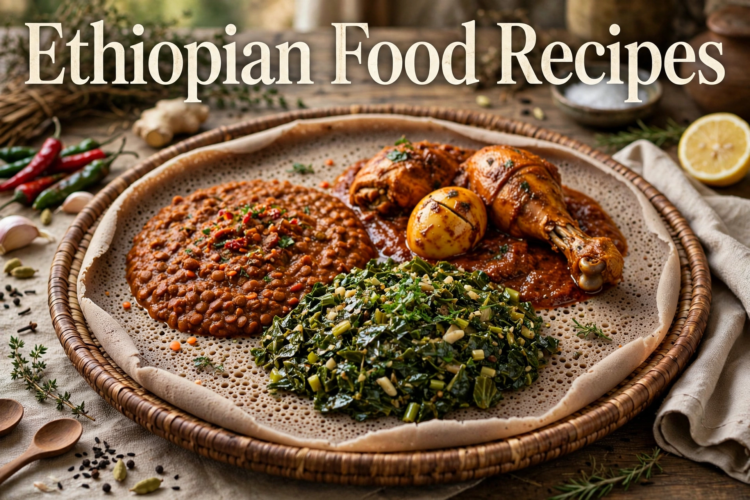
Ethiopian food recipes bring together slow-cooked stews, warm spice blends and soft, tangy flatbread, made for sharing. Several stews are spooned onto a wide piece of injera, everyone tears off a piece of bread, and the food is scooped up by hand.
Many Ethiopian food recipes share the same foundation, so once you understand a few key ingredients, the rest becomes much easier. Berbere gives the stews their heat and colour, niter kibbeh adds richness, and onions cooked slowly until soft and sweet form the base of the most famous dishes. You will find more shared-table ideas here on CapizEats, where simple, crowd-friendly cooking is the focus.
Why Ethiopian Food Recipes Feel So Comforting
The comfort in Ethiopian food recipes comes from time and patience rather than complicated technique. Onions are cooked down slowly, spices are bloomed in butter or oil, and stews simmer until the flavours settle. These dishes are built to be shared, with a platter in the middle of the table and no need for cutlery. The injera itself becomes both plate and spoon.
The Pantry Behind Ethiopian Food Recipes
A small pantry makes Ethiopian food recipes much simpler to cook at home. The two preparations worth making first are berbere and niter kibbeh.
Berbere is the dried spice blend at the heart of the cuisine, made from dried chillies, cardamom, fenugreek, coriander, cumin, ginger, garlic, cinnamon and cloves. Store it in a sealed jar away from light.
Niter kibbeh is spiced clarified butter. Butter is melted slowly, the milk solids are removed, and the clear butter is infused with garlic and ginger. Once cooled, it keeps well in the fridge and can be spooned into stews.
Also keep split red lentils, chickpea flour, teff flour, onions, garlic, fresh ginger, tomatoes, collard greens, cabbage, carrots, potatoes, eggs and chicken, beef or lamb.
Injera: The Heart Of Ethiopian Food Recipes
Injera is a soft, spongy, sourdough flatbread made from teff, and it is the heart of Ethiopian food recipes. It serves as the plate, the bread and the utensil all at once, and its gentle sourness balances the rich stews. A good injera is full of tiny holes and flexible enough to roll and tear.
The batter is fermented for one to three days, which creates its sour flavour and bubbles.
Injera Ingredients:
- 2 cups teff flour
- 3 cups water, plus a little extra if needed
- 1/2 teaspoon salt
How To Make Injera:
- Mix the teff flour and water in a large bowl until smooth. Cover loosely and leave at room temperature for one to three days, stirring once a day, until bubbly and mildly sour.
- Stir in the salt. The batter should pour like thin pancake batter, adding a splash of water if it feels too thick.
- Heat a large, flat, non-stick pan over medium heat. Pour a ladle of batter into the centre and swirl it outwards in a spiral into a thin, even round.
- Cover and cook without flipping until the top sets and fills with tiny holes. Lift out, lay on a clean cloth to cool, and repeat.
Doro Wat In Ethiopian Food Recipes
Doro wat is the most famous dish in Ethiopian food recipes, and it is the stew many people try first. It is a chicken stew braised in a rich onion and berbere sauce, served with hard-boiled eggs, and it takes about two hours from start to finish. Most of that time is gentle simmering, and the long cook is what makes the sauce thick, dark and deeply flavoured.
The onions are cooked down first, chopped finely and cooked slowly until soft, sweet and golden, because that base gives the stew its body.
Doro Wat Ingredients:
- 1 whole chicken, cut into pieces, or 8 bone-in chicken pieces
- 4 large onions, finely chopped
- 4 tablespoons niter kibbeh or butter
- 3 tablespoons berbere
- 4 garlic cloves, finely chopped
- 1 tablespoon fresh ginger, grated
- 2 tablespoons tomato paste
- 4 hard-boiled eggs, peeled
- Salt to taste, and water as needed
How To Make Doro Wat:
- Put the chopped onions in a large, dry pot over medium heat. Cook slowly, stirring often, for about 20 to 25 minutes until very soft and lightly golden, adding a splash of water if they stick.
- Stir in the niter kibbeh, garlic, ginger and berbere. Cook for two to three minutes until fragrant, then add the tomato paste and a little water, stirring until the sauce is smooth and deep red.
- Add the chicken and turn the pieces in the sauce so they are well coated. Pour in enough water to come partway up the chicken, then bring to a gentle simmer.
- Cover and cook for about one hour and 30 minutes, until the chicken is tender and the sauce is thick. Add the peeled hard-boiled eggs for the last 15 minutes. Season and serve hot on injera.
Misir Wat In Ethiopian Food Recipes
Misir wat is a split red lentil stew, and one of the most loved Ethiopian food recipes for everyday cooking. It is simple and filling, with onion, garlic and berbere doing most of the work. It cooks in 30 to 45 minutes, without the long simmer of doro wat, and the lentils break down into a soft, thick stew.
Rinse the lentils well, keep the heat gentle, and stir in a little hot water if the stew becomes too thick.
Misir Wat Ingredients:
- 1 1/2 cups split red lentils, rinsed
- 1 large onion, finely chopped
- 3 garlic cloves, finely chopped
- 1 tablespoon fresh ginger, grated
- 2 tablespoons niter kibbeh or oil
- 2 tablespoons berbere
- 3 cups water
- Salt to taste
How To Make Misir Wat:
- Heat the niter kibbeh or oil in a pot over medium heat. Add the onion and cook for about 8 to 10 minutes until soft and lightly golden.
- Stir in the garlic, ginger and berbere, and cook for one to two minutes until fragrant.
- Add the rinsed lentils and water, stir well and bring to a gentle simmer.
- Cover and cook for 30 to 45 minutes, stirring now and then, until the lentils are completely soft and the stew is thick. Season with salt and serve hot on injera, alongside other stews.
More Ethiopian Food Recipes To Try
Once you have made doro wat and misir wat, the rest of Ethiopian food recipes open up quickly. The dishes below are shorter to cook, and they add colour and variety to a shared platter.
Gomen
Gomen is one of the gentlest Ethiopian food recipes, a simple dish of collard greens cooked with garlic and ginger until tender, then finished with a spoonful of niter kibbeh. It tastes fresh and green against the richer stews. Spring greens or kale make a good substitute.
Atkilt Wat
Atkilt wat is a mild vegetable stew of cabbage, carrots and potatoes with turmeric, cooked gently with onion, garlic and ginger until tender. It has a soft golden colour and no heat from berbere, so it balances the spicier dishes well.
Tibs
Tibs is seared beef or lamb with onion and jalapeno, cooked quickly over high heat so the meat stays tender and lightly browned. The meat is seared in a hot pan with niter kibbeh, then onion and jalapeno are added and cooked just until softened.
Shiro Wat
Shiro wat is a smooth chickpea flour stew, made by whisking chickpea flour into water or stock with onion, garlic, ginger and berbere. It thickens quickly, so it needs steady stirring to stay smooth.
How To Serve Ethiopian Food Recipes As A Shared Platter
Serving Ethiopian food recipes as a shared platter is simple once the stews are ready. Lay a large piece of injera over a wide platter. Spoon each stew into its own neat mound, leaving space between them so the colours stay distinct, with the doro wat in the centre.
Set out extra pieces of injera, rolled or folded, for tearing and scooping. Everyone takes a piece and uses it to pick up a little of whichever stew they like. Keep extra berbere or sliced jalapeno on the side for anyone who wants more heat.
For a crowd, make two or three stews ahead, keep them warm, and build the platter just before eating. If you enjoy sharing food at a gathering, the Crack Dip Recipe For Parties That Everyone Will Love To Try is another crowd-pleasing dish to serve alongside the platter.
Tips For Better Ethiopian Food Recipes At Home
Good Ethiopian food recipes at home depend more on patience than on special equipment. Cook the onions slowly and do not rush the base of a wat, because a properly softened onion gives the whole stew its sweetness and body. Bloom the berbere in warm fat for a minute or two before adding liquid.
Start with a moderate amount of berbere if you are new to it. The heat builds as the stew simmers, so a dish that tastes mild at the start can become warmer by the time it is served.
Make your berbere and niter kibbeh ahead of time if you can. Having them prepared turns a stew into a straightforward cook.
Storing Leftover Ethiopian Food Recipes
Leftover Ethiopian food recipes keep well, and several stews taste even better the next day. Let them cool, then store in sealed containers in the fridge for up to three days. Doro wat, misir wat, atkilt wat and shiro wat reheat well over gentle heat, with a splash of water to loosen the sauce. Tibs is best eaten fresh.
Store injera separately, wrapped in a clean cloth and then in a sealed bag, and use it within a day or two. Leftover stews can also be frozen for up to a month, then thawed overnight and reheated gently.
Ethiopian cooking rewards a slow pace, a warm pantry and a willingness to share. Start with injera, misir wat and one more stew, and add doro wat when you have an afternoon to spare.
Frequently Asked Questions:
What is doro wat?
Doro wat is chicken braised in a rich onion and berbere sauce, served with hard-boiled eggs. The onions are cooked down first until soft and sweet, then the chicken simmers for about two hours.
What is injera made from?
Injera is made from teff flour and water, with a little salt. The batter is fermented for one to three days, giving it a gentle sour flavour and spongy texture, and it is cooked in a covered pan without flipping.
How spicy is berbere?
Berbere is warm and spicy rather than simply hot. It is made from dried chillies with cardamom, fenugreek, coriander, cumin, ginger, garlic, cinnamon and cloves, so it has heat as well as depth. Use less in a stew to control the heat.
How long does misir wat take to cook?
Misir wat takes 30 to 45 minutes to cook. Split red lentils are simmered with onion, garlic, ginger and berbere until they break down into a thick, soft stew.
Can I make these dishes without niter kibbeh?
Yes, you can use plain butter or a neutral oil instead. The dish will still taste good, but it will miss some of the gentle garlic and ginger warmth that spiced clarified butter adds.
What should I serve with a shared platter?
Serve several stews on one large piece of injera, with extra injera on the side for tearing and scooping. A good combination is doro wat or tibs with misir wat, gomen and atkilt wat.
[…] with a little sugar for a topping less sweet than whipped cream. For a savoury contrast, try the Ethiopian Food Recipes With Bold Flavours And Warming Spices on CapizEats, where bold spices meet warming, hearty […]