
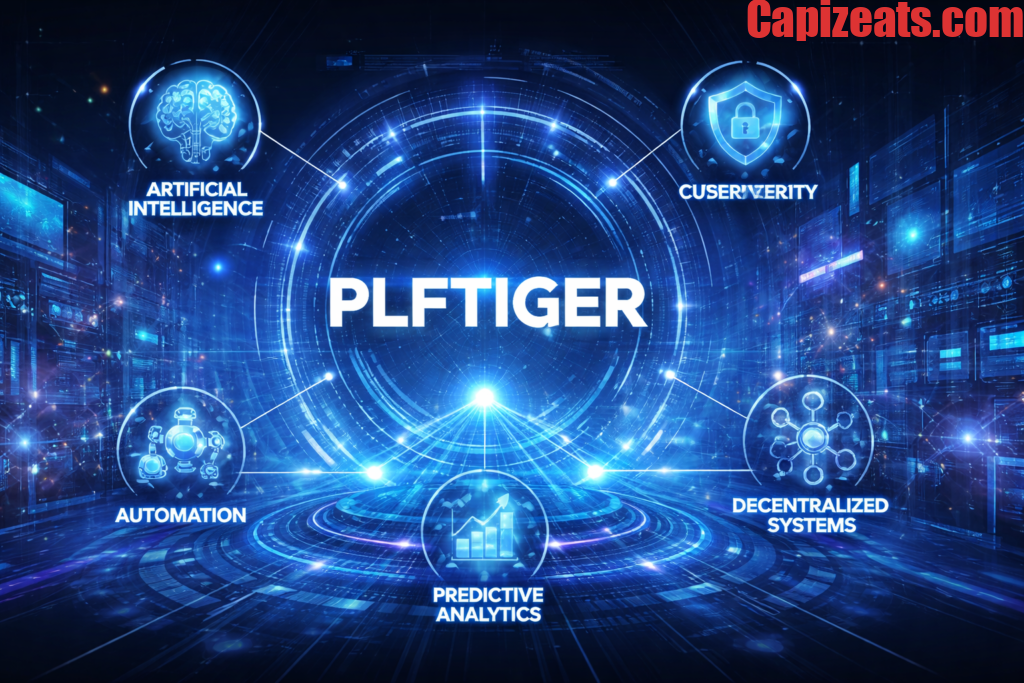

Plftiger is a next-generation technology framework transforming how businesses, governments, and research institutions manage digital operations. Combining AI, cybersecurity, automation, decentralized systems, and predictive analytics, it helps organizations improve efficiency, strengthen security, and make smarter decisions. This article explores its meaning, core technologies, applications, benefits, challenges, and its role in shaping the future of digital innovation.
The Origin and Evolution of Plftiger
Its development emerged as digital systems grew increasingly interconnected. Historically, organizations relied on multiple platforms for distinct functions: one for data storage, another for cybersecurity, and yet more for analytics and automation. While functional independently, these tools often struggle to communicate efficiently, resulting in fragmented workflows, delayed decision-making, and vulnerabilities in security.
At the same time, several technological trends transformed the digital landscape:
- Artificial Intelligence became capable of identifying patterns and automating decisions.
- Cloud computing allowed scalable and flexible infrastructure.
- Advanced data analytics enabled the extraction of actionable insights from complex datasets.
- Cyber threats grew more sophisticated, highlighting the inadequacy of traditional security tools.
Plftiger emerged as a response to these challenges—a framework that unifies AI, blockchain technology, cybersecurity systems, automation tools, and predictive analytics into a cohesive architecture. Instead of operating as isolated technologies, these components work together to create an adaptive, intelligent, and resilient digital ecosystem.
The Meaning Behind the Name Plftiger
The term Plftiger combines technical and symbolic significance:
- PLF is often interpreted as Predictive Logic Framework, Platform Lifecycle Framework, or Project Lifecycle Framework. Each emphasizes structured management of information, intelligent automation, and predictive decision-making.
- Tiger symbolizes strength, speed, intelligence, and adaptability—qualities essential for a platform that monitors complex digital systems, detects threats, and responds efficiently.
Together, the name represents a powerful, agile, and intelligent technological platform designed to enhance operational performance and digital security.
Core Technologies That Power Plftiger
It is built on several advanced technologies that enable intelligent, secure, and efficient digital operations:
Artificial Intelligence (AI) & Machine Learning
AI is central to it. Machine learning algorithms analyze massive datasets to detect patterns and predict outcomes. Predictive analytics anticipates potential risks, while automated decision systems enable rapid response to changing conditions. AI ensures that organizations can operate proactively rather than reactively.
Cybersecurity Systems
Plftiger incorporates behavioral analytics, anomaly detection, and threat intelligence to identify potential security breaches before they escalate. By learning from past attack patterns, the system can respond dynamically, mitigating risks in real time.
Blockchain Technology
Blockchain enhances data integrity and transparency. By storing records in a decentralized and tamper-proof structure, it prevents unauthorized modifications and ensures data reliability across digital systems.
Automation Systems of Plftiger
Automation reduces manual workloads and improves operational efficiency. Routine tasks such as system monitoring, updates, reporting, and workflow management can be executed automatically, minimizing human error.
Quantum-Resistant Encryption
As quantum computing advances, traditional encryption methods may become vulnerable. It incorporates quantum-resistant encryption to safeguard sensitive information against future computational threats.
These technologies collectively create a secure, intelligent, and adaptive digital ecosystem.
Key Features of Plftiger
Plftiger stands out from traditional systems due to its advanced capabilities:
- Predictive Threat Detection: AI-driven monitoring identifies potential cyber threats early.
- Real-Time Monitoring: Continuous observation of network activity, applications, and systems ensures operational stability.
- Decentralized Architecture: Distributes data and processing across multiple nodes, reducing the risk of failures and improving resilience.
- Intelligent Automation: Automates routine operations, allowing employees to focus on strategic tasks.
- Advanced Analytics: Converts raw data into actionable insights for better decision-making.
- Scalability & Modularity: Organizations can implement features incrementally and expand as needed.
How Plftiger Works
The framework operates through four interdependent layers:
- Data Collection Layer: Gathers information from APIs, IoT devices, databases, and cloud platforms, ensuring comprehensive data integration.
- Processing & Intelligence Layer: Machine learning algorithms analyze data, detect anomalies, and generate predictive insights.
- Application Layer: Provides user interfaces, dashboards, and APIs for interaction with the system.
- Security Layer: Encrypts sensitive data, monitors compliance, and enforces robust access control.
These layers work in harmony to create a cohesive, secure, and efficient digital ecosystem.
Major Problems Plftiger Solves
Plftiger addresses several modern challenges:
- Fragmented Systems: Eliminates silos by integrating multiple platforms.
- Cybersecurity Threats: Uses predictive analytics and behavior monitoring for proactive defense.
- Manual Workflows: Reduces repetitive tasks through intelligent automation.
- Data Overload: Transforms massive datasets into actionable insights, improving decision-making.
Industry Applications of Plftiger
Software Development
Supports automated testing, intelligent debugging, and enhanced DevOps workflows. Vulnerabilities are detected earlier, accelerating development cycles.
Artificial Intelligence Research
It enables efficient dataset management, model training, and transparency in AI decision-making. By integrating predictive analytics and automation, it helps researchers streamline AI workflows and improve model accuracy.
Financial Technology of Plftiger
In financial technology, it detects fraudulent transactions, secures digital payments, and ensures regulatory compliance. Its predictive capabilities allow financial institutions to monitor risks in real time and respond proactively.
Healthcare
It secures patient records, enhances diagnostic accuracy, and protects sensitive medical data. Healthcare organizations benefit from its AI-driven insights and automated monitoring to maintain privacy and operational efficiency.
Government & Defense
Plftiger safeguards critical infrastructure, detects cyber espionage, and strengthens resilience against large-scale attacks. Its decentralized architecture and predictive security measures make it ideal for public sector cybersecurity.
Smart Cities
For smart cities, it secures IoT devices, manages energy systems, and optimizes traffic control through real-time analytics. Its integrated platform enables cities to operate efficiently while maintaining data security.
Benefits of Using Plftiger
| Benefit | Description |
| Enhanced Cybersecurity | Proactive threat detection prevents breaches. |
| Operational Efficiency | Automation reduces human error and repetitive work. |
| Data-Driven Decision-Making | Real-time analytics inform smarter strategies. |
| Scalability | Flexible modular design adapts to organizations of any size. |
| Reliable Performance | Ensures consistent system functionality and data integrity. |
Plftiger vs Traditional Technology Systems
Traditional systems operate independently, requiring multiple tools for analytics, automation, and security. Plftiger integrates these functions into a single ecosystem, enhancing efficiency, reducing complexity, and enabling proactive responses to digital challenges.
Challenges and Limitations
- Evolving Concept: Limited large-scale implementations.
- Standardization: Needs industry-wide protocols for interoperability.
- Implementation Costs: May be expensive for smaller organizations.
- Integration Complexity: Legacy systems may require custom adaptation.
- Regulatory Uncertainty: Policies around emerging technologies may slow adoption.
The Role of Plftiger in the Future of AI
Plftiger supports the evolution of autonomous AI systems by providing:
- Responsible AI Governance: Ensures transparency and accountability.
- Secure Data Ecosystems: High-quality, privacy-compliant data for AI systems.
- IoT and Connected Systems Management: Facilitates secure operation of expanding networks.
- Quantum-Resistant Security: Prepares for the next generation of computing threats.
Future Developments and Research Directions
Plftiger is evolving to include open-source frameworks that encourage global developer collaboration, decentralized AI networks that enable collective intelligence, and quantum-safe cybersecurity solutions to protect against emerging computational threats. It also emphasizes ethical AI governance frameworks, sustainable distributed computing for energy-efficient operations, and integration with Web3 technologies to strengthen decentralized digital ecosystems, making it a forward-looking platform for modern digital innovation.
Implementing Plftiger in Organizations
- Assess Current Infrastructure: Understand workflows, security, and data management.
- Pilot Program: Deploy in a small department to evaluate effectiveness.
- System Integration: Connect Plftiger with existing applications and databases.
- Training: Educate employees on usage and features.
- Monitoring & Optimization: Continuously evaluate performance and adjust as needed.
Gradual adoption ensures a smooth transition and mitigates risk.
Why Plftiger Could Become a Major Digital Innovation
As organizations face growing cyber threats, increasing data volumes, and demands for predictive intelligence, integrated digital frameworks are essential. By unifying AI, cybersecurity, automation, and decentralized systems, it offers a scalable and intelligent approach to modern digital infrastructure.
Conclusion
Plftiger represents a visionary framework for the future of digital technology. By combining artificial intelligence, cybersecurity, automation, and decentralized systems into a single, cohesive platform, it provides organizations with the tools needed to operate efficiently, securely, and intelligently.
Although still in development, it illustrates how unified digital ecosystems could streamline operations, strengthen security, and drive innovation across industries. As technology advances, frameworks like it are likely to play a central role in shaping the next era of digital transformation.